

Cart
0
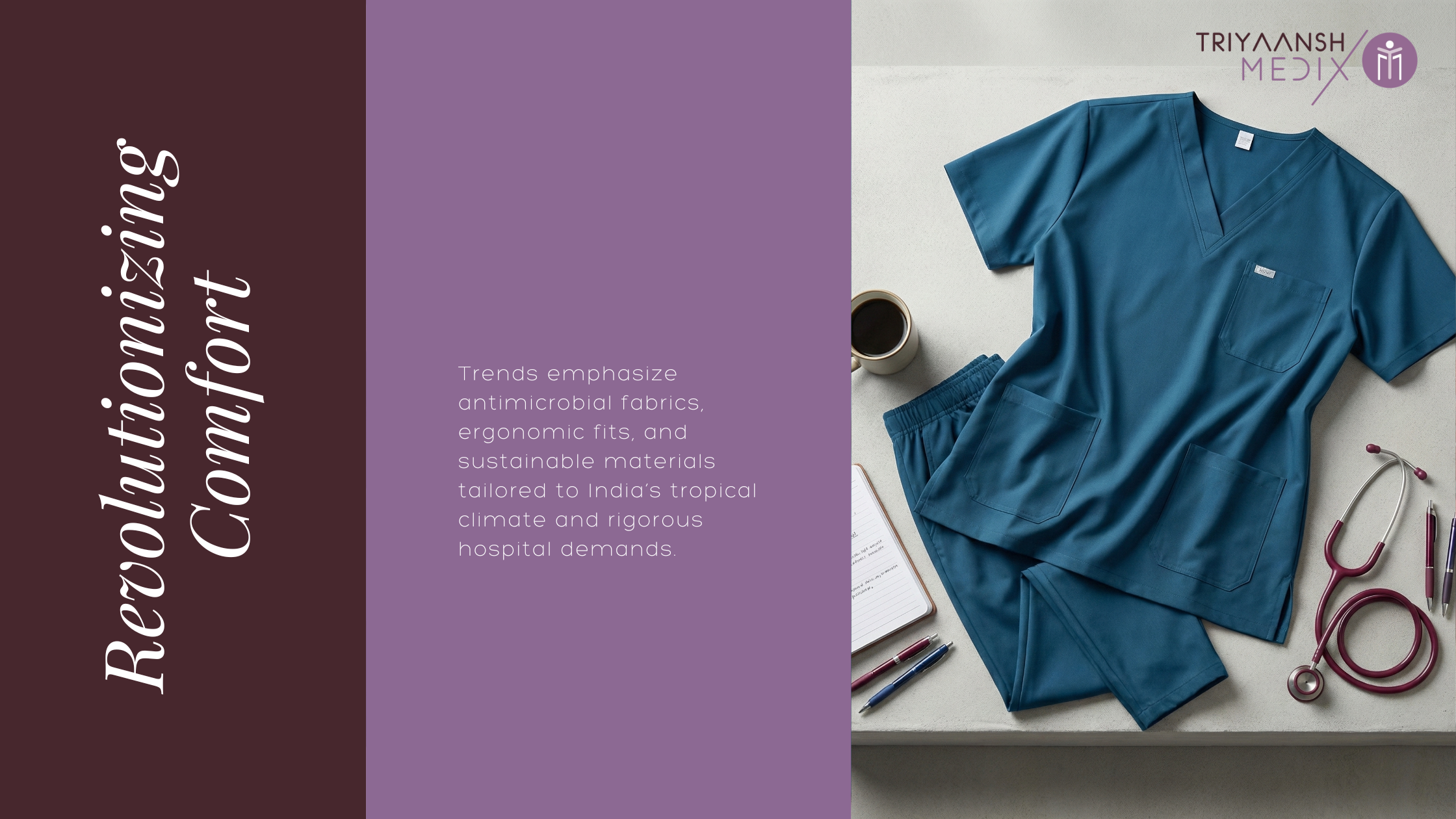
As India’s healthcare sector surges toward a projected 1.4 million new jobs by 2030, medical uniforms are no longer mere attire—they’re strategic tools enhancing safety, efficiency, and pride for doctors, nurses, and technicians. In 2026, trends emphasize antimicrobial fabrics, ergonomic fits, and sustainable materials tailored to India’s tropical climate and rigorous hospital demands.
India’s Healthcare Challenges Fueling Uniform Innovation
Indian professionals endure 12-16 hour shifts in humid conditions, facing infection risks and fabric degradation from frequent industrial laundering. Leading trends introduce 60/40 cotton-polyester blends in scrub suits, which withstand 150+ wash cycles while wicking moisture 4x faster than standard cotton. These advancements slash hospital replacement costs by 25% and align with India’s medical scrubs market, forecasted to reach USD 3.8 billion by 2032.
Breakthrough Fabrics for Hygiene and Comfort
2026 spotlights performance textiles engineered for India’s infection-control priorities post-pandemic.
-
Antimicrobial Silver-Ion Fabrics: These eliminate 99.9% of bacteria, crucial for ICUs and high-volume OTs.
-
Fluid-Resistant, Breathable Blends: scrub that sets repel blood and fluids while ensuring airflow, reducing skin irritations by 15% during Delhi summers.
-
Anti-Static Properties: Vital near sensitive equipment, preventing shocks in cardiology and radiology wings.
These fabrics cut healthcare-associated infections (HAIs) by up to 25%, boosting professional focus and operational efficiency.
Ergonomic Designs for Diverse Indian Workforces
One-size-fits-all is obsolete; 2026 prioritizes body-positive, role-specific uniforms for India’s varied builds—70% female nursing staff to taller surgeons.
-
Jogger-Style Scrubs: Scrub sets feature elastic cuffs for seamless patient handling without restriction.
-
Curved-Hem Lab Coats: Prevent ride-up during bends, with 6-8 cargo pockets for stethoscopes and syringes—saving 10 seconds per tool access in emergencies.
-
Gender-Neutral Sizing: Inclusive fits from XS to 5XL accommodate regional diversity.
Comfortable attire reduces fatigue-related errors by 20%, empowering professionals and driving premium sales for brands like Triyaansh Medix.
Sustainability: The New Standard in Medical Apparel
With India’s ESG mandates and green hospital certifications rising, eco-friendly uniforms gain traction.
-
Recycled Polyester Blends: options cut production water use by 50%, appealing to chains like Apollo Hospitals.
-
Organic Cotton Variants: Maintain vibrancy after 50 washes, minimizing landfill waste.
-
Low-Impact Dyes: Preserve color in monsoon-season laundering.
Sustainable gear fosters professional pride while propelling India’s medical clothing market toward a 15% global share in a USD 229 billion industry by 2035.
Regional and Cultural Adaptations for Inclusivity
From Rajasthan’s heat to Himalayan chill, 2026 uniforms adapt: V-neck breathable scrubs for South India, fleece-lined coats for northern clinics. modest designs and subtle regional embroidery respect cultural norms in rural facilities, reducing staff turnover by 12% amid nurse shortages.
Tech-Enhanced Uniforms on the Horizon
RFID-tagged lab coats enable inventory tracking in AIIMS-like smart hospitals. UV-sensor fabrics alert outdoor medics to exposure risks, while durable builds support seamless integration—positioning Indian brands for export growth.
Scrubs vs. Lab Coats: Role-Optimized Comparison
Triyaansh Medix is also bridging these trends, delivering ROI through longevity and performance.
Economic Impact on India’s Medical Apparel Sector
At 3.67% CAGR, India’s uniform market thrives on innovation, with SMEs . These trends save hospitals crores in HAI mitigation and replacements, while professionals gain stylish, functional pride—lowering burnout in a sector adding 1.4 million roles.
